About this blog
News and analysis of developments in the enterprise communication industry and market with primary focus on Europe.
The author aims to tap into ideas, insights and thoughts of the readers to get varied perspectives.
Views expressed in this blog are solely the author's opinion and in no way reflect those of his employer.
Sometimes I wonder how business decisions are made! One of those that baffle me is the choice between Call Pilot and Exchange UM. A little background on this - Nortel and Microsoft announced an alliance in July 0f 2006 agreeing amongst other things to do joint R&D and synergise their go-to-market program in the area of UC. Nortel has a very strong background in the areas of telephony, contact centre, messaging (including Unified Messaging, a market where Frost & Sullivan ranks them second in North America). Microsoft on the other hand has very high market share in e-mail and collaboration space. One of the areas of product overlaps for the Microsoft-Nortel alliance is Unified Messaging. Nortel's offer, the CallPilot has been in the market for at least 10 years. I know, one of my peers used CallPilot in his lab way back in 1997. Microsoft on the other hand introduced Unified Messaging capabilities in Exchange 2007.
Unified Messaging seems to have never taken off as expected. In these years, the industry evolved to offer Unified Communications with very little installed base on Unified Messaging. So, despite the long history and relative product maturity, CallPilot and its product peers didn't create the adoption curve, the markeeters so hoped to achieve. On the other hand, UM in Exchange 2007 seems to have caught the fancy of many. In the numerous discussions that I have had in recent months with user organisations and channel, there is a unanimous voice to try and test UM within Exchange. That said, the numbers are far lower than what CallPilot commands. Now I am sure if I had spoken to the market when CallPilot was launched, I might have encountered similar euphemism. So when I hear the buzz in the industry suggesting Nortel might reduce R&D activities on CallPilot, I wonder how such decisions are made!
If you talk to people who have been part of the Unified Messaging (UM) evolution, you may notice a taste of bitterness towards Microsoft. The Redmond based company introduced Unified Messaging in their Microsoft Exchange 2007. This development comes almost 10 years into the life of UM. Yet all you hear in the market these days is Microsoft Exchange UM.
A few weeks ago, I was asked if there was any traction for Microsoft's UM in the market and how it affected competition. Based on my discussions with user organisations and having seen some fresh shipment figures of the main players, I could say with some confidence that I didn't see any effect on competition. To the question on traction, I begged for time.
Since then I spoke with a number of people in the channel community across the world. Plus I interacted with a number of user organisations. For instance, the other day the IT Director of a borough in England clearly indicated that he will be considering UM once he installs Exchange 2007. I met up with a country manager of a software vendor who said that a growing number of his clients are talking about UM in conjunction to Exchange 2007.
This begs a question--what is it about Microsoft UM that leads to such a traction compared to competition's products that has been in the market for over 10 years? I can offer you my thoughts but first let me find out what you think.
Microsoft released a number of UC products with a lot of fanfare in SanFrancisco. It was great to watch Bill Gates deliver the keynote. As always he offered a great vision; this time for office communication.
Microsoft released a few products today that include Office Communication Server 2007, Microsoft Office Communicator 2007, Microsoft RoundTable, Microsoft Exchange Server 2007 (new release), Live Meeting 7.
You may view the webcast http://www.microsoft.com/uc/default.mspx to get a grip of what they are saying if you haven't already done so. In this post I am going to focus on the challenges ahead for Microsoft UCG.
Challenge 1- Negotiating the installed communication technologies: The communication technology market (enterprise telephony; conferencing including audio, video and web; collaboration) are mature. In some cases (ex: enterprise telephony) the solutions are pervasive.
Microsoft has taken a bold approach that it will build a new communication paradigm. Its newly released products won't work with almost any PBX (probably except Nortel CS1000 perhaps), conferencing equipments, or phones that are already deployed. To address this, they are build a industry partner ecosystem. For example- In the PBX world, Nortel is developing a out-of-box integration capability with OCS. Similarly Ericsson has a mobility server in mind and Mitel is releasing a communication server built around OCS for the SMB.
Challenge 2- Unleashing the full set of capabilities: What Microsoft can offer in ideal conditions is no doubt powerful and very useful. There is no doubt in my mind that it offers significant advantages over present technologies. However to be able to enjoy the capabilities, users must not only deploy Microsoft UC products but also integrate them with their installed base. At this point in time this is a near impossibility. The success for Microsoft and the user depends on whether the users decides to replace their 'sunk-in investments' in favour of Microsoft certified products.
The assumption that users will deploy 'Microsoft or Microsoft certified products everywhere' is like a dream that every man on earth will one day walk on the moon. Nonetheless there will be deployments in pockets. Users will buy parts of the technology to fill gaps. However, they will resist discussions of replacements unless they are sweetened enough.
Dear Readers,
Apologies for not updating this space for over a month. It has been a crazy time. I am meaning to become regular again. You can help me by participating in this discussion. I am working on a report on the Unified Messaging market for which I am looking to tap into your insights. For starters, what has been your experience with Unified Messaging? If you have not yet deployed then why not?
Lets get this started. Please write-in your perspetives in the comments section.
Cheers,
Shomik
I am referring to IBM and Microsoft. Both announced a roadmap for their UC portfolio. IBM's Lotus Sametime Unified Telephony is expected to be GA by mid 2008. This launch will be preceded by the release of Lotus Sametime "Standard" in Q4, 2007, Lotus Sametime "Entry" 8.0 and Lotus Sametime "Advanced" 8.0 in Q1, 2008.
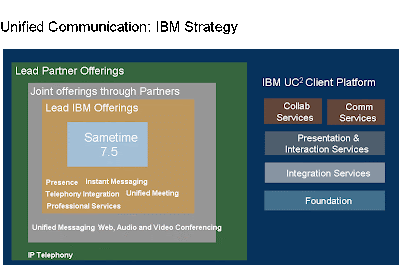 IBM's unified communication strategy is centred on its sametime offering. It aims to tie-in all elements of communication and collaboration to its sametime offer which is expected to evolve to support unified telephony. IBM signed a OEM agreement with Siemens Enterprise Communication to license elements of Siemens' Openscape.
Siemens has been one of the early adopters of open communication. Support for standards-based communication facilitating interoperability has been the cornerstone of its OpenPath mantra. Maintaining the central elements of its vision, Siemens has consistently believed in open communication since 'LifeWorks' was coined. In fact, their Openscape is probably one of the best fully-baked unified communication portals available in the market today.

Siemens had a very engaging relationship with Microsoft. Way back in 2005, Siemens had launched HiPath openscape telephony control link (TCL), a separate server that sits between LCS and PBX (supports Alcatel, Avaya, Cisco, Nortel in addition to Siemens) to facilitate exchange of presence and notification across platforms. Their relationship suffered since Microsoft formed an alliance (ICA) with Nortel. ICA recently celebrated its first anniversary. It is believed that they have sold in excess of 500,000 licenses (Nortel telephony licenses and LCS CALs) in their first year. ICA product portfolio is expected to be strengthened by the general availability of OCS/MOC.
Microsoft announced the 'release to manufacturing' of OCS/MOC and Round Table on July 26th. Eric Swift, Senior Director, Unified Communication Group at Microsoft said that OCS/MOC is due to be available from Oct 16th 2007. The price list will be made available on September 1. He said that Live Meeting 7 will be released this fall. Microsoft Exchange 2007 SP1 beta is released. At a keynote at VoiceCon, Gurdeep Singh Pall announced Quality of Experience monitoring server, a product developed by Psytechnics. He announced the licensing of Microsoft's RT audio codec about which I have commented in a previous post.
Microsoft's UCG seems confident of OCS/MOC. It has built a strong ecosystem, its alliance with Nortel is delivering results. Recent agreement of cooperation with Cisco is a great step towards creating a traction in the communication technology space. In the past one year, Microsoft has taken concrete steps to shape themselves as a player in the voice market.
 My last post has been quite a while back. Have been busy trying to wrap up a mobile application report. In the meanwhile there has been significant developments in our space. I'll try to comment on them in the coming days.
Recently, John Chambers and Steve Ballmer shared the podium at an event in New York that was moderated by Charlie Rose. They announced that both companies would drive interoperability between their products. There is an interesting blog by NY times summarising the event. In my opinion, the discussion at the event bore a clear indication of a transition to 'best-of-breed' infrastructure sourcing amongst large customers. This came out loud and clear in two of my conversations yesterday. Earlier in the day, in a conversation with a good friend at Siemens, the success story of HiPath 8000 with Global Crossing came up. Later that evening, Eric Swift from Microsoft highlighted ICA's success with Global Crossing. Now thats a coincidence! It is well known that both ICA and Siemens have capabilities to have pitched for both of those RFPs with Global Crossing.
Another aspect of the announcement is the recognition of the market transition to convergence and collaboration. I remember listening to a Digital 2.0 panel discussion conducted by Jeffrey Moore, where Bill Gates evangelised the scope of digitisation. He urged us to think as if computing and storage were free. The scope of digitisation is indeed far reaching enabled by software. He mentioned communication, collaboration and group productivity as the areas where innovation will concentrate. Similar thoughts ware put forward by fellow panelist John Chambers who argued the next transition to be from transaction to interaction caused by innovation in the realm of collboration and convergence.
With both Microsoft and Cisco looking at the same market transition through their individual lenses, customers have started demanding that their products interoperate. This according to me is the fundamental underlining for their cooperation. The best-of-breed strategy that this alliance endorses will help unleash intellectual capital for innovation in the enterprise space that hasn't yet seen the success that consumer market continues to enjoy.
Software based PBX maker Sphere Communication has agreed to become a part of NEC Corporation. The Japanese manufacturer of electronics goods NEC Corporation is to acquire all shares, intellectual property and patents of Sphere for an estimated $ 42.1 million.
Sphere Communication is a tier-2 supplier of software based communication services available primarily in North America. One of the key assets of Sphere is its development platform (Sphere Communication Services Engine) that remains an object of envy for many. Its user-based pricing approach is its competitive advantage. This underlies its best-of-breed approach. Based on open technology, its PBX can work with a multitude of third party phones including Aastra, Grandstream and Polycom. They inter-work with third party voice media gateway from the likes of Allied Telesys and AudioCodes.
NEC on the other hand has a wide breadth of portfolio that ranges from TDM to IP. Frost & Sullivan analysis by Kriti Rao suggests NEC is ranked fourth in terms of market share in N.A. One of the main challenges facing the company is related to transformation and this is exactly where Sphere comes in. Sphere has a small team of talented people who have a forward-looking vision.
NEC Corporation has been focussing on growing their office equipment business for over two years now. They have a JV with Philips in Europe. In addition, they have something called NEC Infrontia. In the U.S the operating business is NEC United Solutions. With the acquisition, Sphere will be absorbed as a operating unit in NEC United solutions. We are yet uncertain of the autonomy of Sphere in the future. Todd Landry, Senior Vice President, Sphere Communication said "this announcement will help Sphere scale and expand its reach".
I am told that channel partners have nothing to fear. Most of them will be happy to include NEC's portfolio. I am not sure. The utility of Sphere's business with their distribution networks is very different from NEC's. Moreover, it will be interesting to see how Sphere's technology partners take this announcement. Overall, I think this is a good deal.

So, the marriage is complete. The merger of Mitel and Inter-Tel will lead to the joint entity to become the market leader in SMB VoIP in the U.S. It will be interesting to see how this announcement affects their international strategies, a market that is three times the size of NA and where Mitel and Inter-tel have very limited and localised presence.
ShoreTel has come back strong behind a successful IPO. Not only has it launched a counter claim alleging that Mitel has infringed its patents, but also has filed claims of damages up to $10 million and injunction on Mitel for making false or misleading statement during ShoreTel's run up to an IPO.
ShoreTel claims that Mitel's ICP 3300 infringes on its patent on VoIP traffic through a firewall. I have noted in the past that Mitel's actions were in poor taste.
The press from yesterday read that Gurdeep Singh Pall is happy with the progress made by his technical team. OCS 2007 is now code complete and will release to manufacturing. This means that the product will be GA before the end of September, 2007.
The PR offered some pricing information. I have been betting on $100 list price for CAL. I was close. Gurdeep announced that OCS client access license (CAL) would come in two flavours: Standard and Enterprise.
Standard CAL: The standard CAL would have IM and presence capabilities. List price- $21.
Enterprise CAL: This would offer all of the conferencing and VoIP call management features and will be list priced at $97.
It has to be noted that in addition to the CALs, organisations need to buy the server(s). Customers using LCS need not worry. Microsoft has released documentation to help migrate from LCS to OCS. Its service assurance agreement takes care of the CALs. However, the enterprise needs to purchase the additional server.
The market opportunity is quite large. There has been in excess of 50,000 downloads of Microsoft OCS beta release software from the web in addition to the distribution of over 50,000 beta kits. If we look at the installed base of exchange systems & LCS globally, OCS in its first year can rake business of around $1 billion.
Finally, to be benefits. This is where I was a bit dissapointed. Well for two reasons. One that I wasn't commissioned to write the white paper that Art Rosenberg wrote. Nothing against Art. He is a veteran in this space with a lot of experience and I respect his views. However, the paper failed to come up with compelling reasons to deploy UC. It talks of
a) reducing internal technology TCO costs, including procurement, support and administration
b) reducing costs for user communication services particularly for mobile devices
c) increasing individual end user time productivity associated with communication activity
d) increased business processs performance by providing greater flexibility in making contact with different people more quickly and in different ways.
which to me looks like the solution to be cheaper and offer time-cost-productivity benefits. What about value destruction. How many of you turn-off your corporate IM clients to save yourself from distraction?
In the end, I believe that Microsoft's UC is a neat concept. Art very accurately talks of contexual communication. To me, thats the value-add of Microsoft's UC, whose ROI is subjective to user's business. To be clear, I am not a skeptic. I endorse the product. I fact, I think OCS and office communicator 2007 launch will drive away competition from telephony vendors in the presence and user interface market. One of the secret treasures in Microsoft's arsenal is its voice management capability. I reckon that the story of their real time audio codecs have not been well covered.
I spoke with Fabien Maisl, Head of Marketing in Cirpack last week. I am told that he is the best person in Cirpack to discuss IP centrex. He outlined the success stories of IP centrex in residential and business environments. Recent reports suggest a 50 percent rise in their installed base that has swelled to more than 6 million active users.
In a related story, Jeff Pulver's VON magazine attracted my attention to a news item from CommuniGate. Aurora, a Ontario based ASP has selected CommuniGate pro to offer messaging and groupware solutions to SMB customers (20-200 users).
It is interesting to see news items talking of the success stories of IP centrex, web services model amongst others. Telcos have undertaken massive restructuring of their infrastructures to facilitate these kinds of service delivery. At this point in time, user base is concentrated in the small business segment (sub 50 users). It will be interesting to see if operators can come up with value propositions to entice a mainstream.
Aastra Technologies released its second quarter results recently. Sales grew at 6.9% y-o-y in Q2 thanks to increased momentum in Germany. The completion of restructuring DeTeWe has helped it focus on the German market that I estimate to be growing at over 5.5%.
One of the fascinating items in the report has been the increase in its gross margins in Europe. Defying the market trend (well almost if you exclude Cisco), Aastra Technologies saw an improvement in its gross margin that grew to 43.1% of sales from 40.7% in the same period last year. This has been despite an increase in SG&A as the report suggests. My opinion is that currency fluctuation has a role to play in this. This is because the fixed costs overall including salaries has remained more or less stable and variable costs (read marketing) saw a modest increase in the past year. Honestly, this is a good result as I don't see price decline eroding gross margins.
In the previous quarter, Aastra Technologies completed the acquisition of Elocom, a Portugese distributor that promotes NeXspan family of products.
Yes indeed. Mobile IP Centrex arms the mobile operators to offer primary business telephony functions to very small businesses. Several mobile operators including Vodafone have been trialing such solutions for some time now.
I spoke with Thomson's Cirpack today who said that their platforms support in excess of 6 million active IP centrex subscribers. The number includes residential as well as business users. I believe that at a connection fee of around €15/user/month, the market size for business customers in sub 20 segment in Europe would be approximately €429 million in OPEX.
Mobile IP centrex is a platform that mobile operators can explore and target the small business segment of the market. The best advantage for a mobile operator is in the future proofing of their investment. As IMS mature, some of these softswitches can be turned into CSCF in the IMS core network.
In its next major release, Aastra's NeXspan IP PBX can support Nokia E60 and Aastra i2052 softphone. The interestin

g bit is that customers don't have to install any additional software on Nokia devices - a marked difference from the path Avaya and Cisco has taken.
For the customer, the lack of need for additional software reduces the barriers of entry into the FMC world. This also allows Aastra to form partnerships to be formed with the likes of private network providers as well as low power GSM license winners. As this trend hits mainstream, I reckon that mobile operators will find it hard to stop their subsidised handsets from being used against them.
First the regulator, then the European Commission and now the judiciary. It seems like mobile operators are out of luck these days. Their comparative higher tariff for basic services is not helping them win any new friends. The days of their unique value proposition is over. Today, alternate technologies such as IEEE 802.x and other Internet based services are challenging the dominant position of GSM/GPRS/EDGE/UMTS etc.
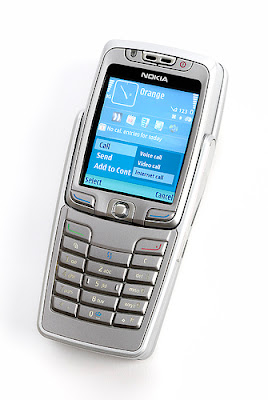
Recently, in a case between Truphone and T-Mobile (UK), a judge granted mandatory injunction forcing T-Mobile (UK) to interconnect with Truphone. Truphone uses the Internet to route mobile calls thus reducing the mobile operator to a last mile mobile network provider.
This and others are creating a momentum. Mobile operators are facing similar situation as that the incumbent telcos faced with local loop unbundling and other aspects of deregulation. At the end of the day, increased competition is always better for a whole lot of people than not. Businesses and consumers are likely to benefit in the long run. It is an encouraging sign for the enterprise mobility industry especially for players such as Private Mobile Networks and BT Mobile.
Another feather in the cap of Internet service providers came from across the atlantic. FCC is planning to aution 30MHz in the upper and 30MHz in the lower 700MHz bands early next year. These frequencies became available as analog broadcasters using TV's UHF channels 52-69 are switching from analog to digital in 2009. The commission Chairman Kevin Martin appears to have circulated a draft order to have open access rules for two 11 MHz blocks of the total 60 MHz in the 700 MHz band that is to be autioned. This is a good news for players such as Truephone and others including Google who seem to have shown interest in bidding.
Microsoft is not always associated with quality. However, the forthcoming OCS 2007 which is expected to be in the market by September 2007 has managed to pull a punch. Microsoft has been boldly professing the future of telephony for sometime now. First at VoiceCon SanFrancisco 2007, it was Jeff Raikes who sent the PBX manufacturers into panic mode by predicting that there will be 100 million softphone users by 2009 and that the cost of per line telephony would decline by 50% then from its present price levels.
Later, Gurdeep Singh Pall mentioned at CeBIT in March 2007 that Psytechnics has credited Microsoft OCS to provide better quality of service for voice call when compared to Cisco Call Manager.
Until today like
Matt McGillen, I believed it to be a marketing gimmick to move away the communication conversation from the home turf of Cisco. I had read what Matt had found out, but could understand the ramifications when Mike Hollier, the CTO and founder of
Psytechnics explained to me how it works.
Microsoft has built interesting technology that rapidly changes the buffer size resulting in improved performance. Their real time audio codec makes use of variable bit rate transmission that along with varying buffer size improves the performance. Moreover, the technology uses the silence mode more effectively than competition. Also, Microsoft is making use of Forward Error Correction (FEC). Overall, Microsoft has been clever in their usage of software technology to score points over competitors hardware technology. I wonder if the industry will conspire to prove Jeff Raikes right!
Next Monday (July 16th), ICA will complete one year of existence. The alliance has made great strides in joint-development although they still lag the advances made by Siemens, Alcatel amongst others in their depth of integration with Microsoft's UC portfolio.
Their recent PR noted that they have sold over 430,000 licenses worldwide. This is definitely impressive when we compare it to the LCS 2005 installed base of just of 2 million licenses worldwide.

It is interesting to see how quickly telephony, collaboration and messaging vendors moved past UC once Microsoft announced their ICA with Nortel. Today, most of these businesses emphasise on business process integration, web services amongst other things. I believe that Microsoft will enjoy strong adoption of OCS in 2008-09. It will interesting to see the attach rate of Nortel to those deployments.
I received a PR from Siemens Enterprise Communications (SEN) which I think is interesting. It says that SEN will operate as a service provider to run internet services for Accor Hotel group in Germany.
In this 5 year pilot project, SEN will act as a project developer, investor and operator. This project envisages a change in the way guests are billed for the services they use. Instead of  buying quotas of time, guests will be able to pay for the time they use. SEN will bear the project costs, maintenance charges, operation and customer service. All usage fees collected by the hotel will go to SEN.
This is an interesting proposition. I am surprised that Accor hotel group didn't include telephony in this business model. we all know how much of phone calls we make from our hotel rooms.
Beside that this is an interesting development from a few angles. First, it helps Accor group to focus on its core competence. Second, it allows SEN to develop propositions that lead to increase in the usage of its services. These two together offer better services in both hospitality and communication.
There are certain issues that need consideration. On one side, Guests might take notice of the difference in customer service wrt communications. Furthermore, there is the larger question of the trade-off between profitability and customer experience for SEN.
I am sure most of the readers know that Google acquired Postini for $625 million. The blogosphere is full of comments on how aggressive and passionate Scott's team has been and what Dave Giroud mentioned in the press.
It is encouraging to see Google invest a PE multiple of 10 to invest in complimentary security product. This bolsters the security SaaS movement. However, we need to understand some crucial mismatches. Google Apps customer base is largely the 1-2 user segment while Postini's market is in the 100+ user segment.
Google Enterprise team have experienced the benefits of partnering with Postini. However, Postini continues with its channel recruitment and enablement strategy which is very different from Google Apps partnership strategy. Currently, Postini has a healthy team of 1600 resellers serving 35000 businesses and over 10 million customers. It will be interesting to read Google Enterprise communique to Postini's channel once the acquisition is completed (which is expected to happen by Sept, 2007).
I would also like to highlight the difference in business model. Google's enjoys a leadership position in the ads market which is something they would like to take into the corporate space. Its a difficult sale however Google being a innovator, I am sure the clever techies will come up with an non-intrusive way. However, thats not the point. The difference in the business model is what I want to highlight. Google-Postini and Postini-reseller network have different business models which are not sustainable in the long run. And in fact, Google's track record in this space isn't encouraging. Yes, I am thinking of Feedrunner, GreenBorder etc.
Finally, lets look at the big opportunity ahead. Postini has an interesting portfolio of products around security compliance. Though its not the biggest selling app yet for Postini, Google can scale it to provide an attractive and valuable portfolio of complaint communication services using Positini's policy enforced TLS amongst others. I think that there is a great possibility for Google to embed some of Postini's intellectual property into its product suite. This can justify the PE multiple that Google agreed to pay.
On the sidelines of its analyst conference in Las Vegas, Mitel announced that it sued ShoreTel over four patent infringements. ShoreTel on the other hand was busy preparing for its IPO. Shares were expected to have started trading on wednesday. This is a sad news as it couldn't have happened at a more inopportune time for ShoreTel.
Ironically, Mitel has been having a rough ride for a couple of years. Last year, it was forced to shelve its plans for an IPO when Vonage's public offering failed to hit the right notes following a patent infringement lawsuit issued by a carrier. Moreover, Mitel's attempts to acquire InterTel has been facing rough waters following Mihalyo's private equity backed counter offer. For a company that have been in corners, the executives must well know how much pain it causes.


